The Role of the Sangha Institution in People’s Political Participation
Keywords:
Role, Sangha Institution, Political Participation, CitizensAbstract
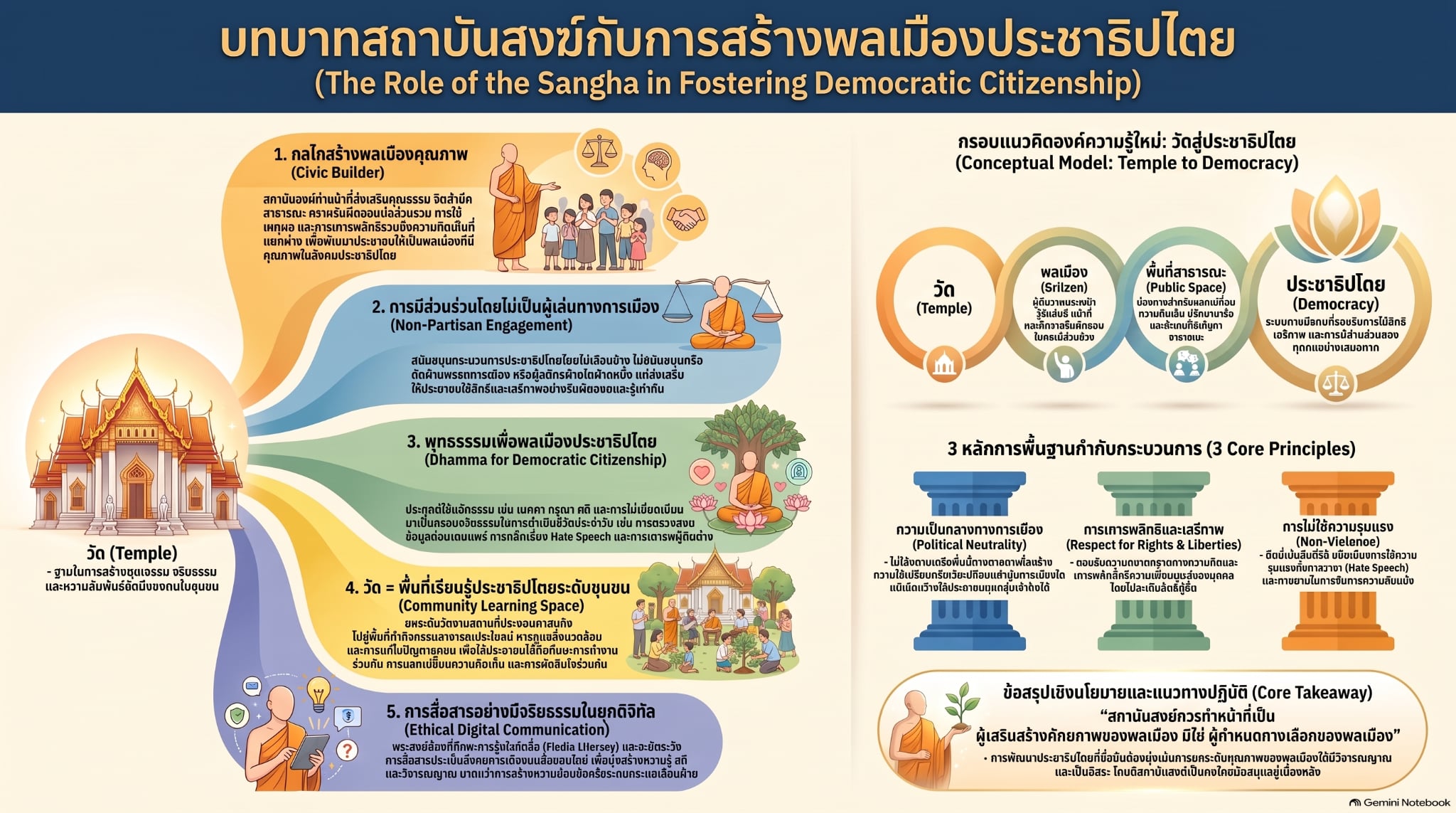
This academic article aims to analyze the role of the Sangha institution in promoting people’s political participation and to synthesize appropriate forms of participation within a democratic society. The study was conducted through documentary research and analysis of academic concepts, Buddhist principles, related research, and relevant documents. The findings indicate that political participation extends beyond voting and includes following political news, expressing opinions, presenting problems and demands to government agencies, participating in community activities, and monitoring the exercise of political power. The Sangha institution has a close relationship with people and local communities and therefore can play an important role in supporting political participation without directly engaging in partisan politics. The study found that the Sangha can contribute to democratic development by promoting civic consciousness, morality, ethics, public responsibility, respect for rights, and acceptance of differing opinions. Temples can also serve as community learning and public spaces where people have opportunities to exchange ideas, discuss social issues, and participate in activities for the common good. In the digital era, political information and opinions can spread rapidly, making careful and responsible communication by monks particularly important, especially regarding controversial political issues. Therefore, the appropriate role of the Sangha institution is to function as a mechanism for developing quality citizens and creating constructive public spaces. Such a role can strengthen democratic values while maintaining the appropriate religious position of the Sangha. Political decisions should ultimately remain the responsibility of citizens, who should make decisions based on accurate information, reason, respect for differences, and individual autonomy.
References
กิตติทัศน์ ผกาทอง. (2556). การมีส่วนร่วมทางการเมืองของสถาบันสงฆ์ในสังคมไทย. วารสาร มจร สังคมศาสตร์ปริทรรศน์, 1(2). 1-22.
เกษฎา ผาทอง และธีรภัทร์ เสรีรังสรรค์. (2561). พระพุทธศาสนากับการเมืองในสังคมไทย. วารสารวไลยอลงกรณ์ปริทัศน์, 8(1). 195-207.
จิรารัตน์ อินศร และสหัทยา วิเศษ. (2567). การมีส่วนร่วมของประชาชนในนโยบายสาธารณะทางการเมือง กรณีศึกษานิสิตสาขารัฐศาสตร์ มหาวิทยาลัยพะเยา. วารสารไตรศาสตร์, 9(2), 40–47.
ชูชาติ สุทธะ. (2560). พระสงฆ์กับการส่งเสริมประชาธิปไตยหรือทำลายความเป็นกลาง. วารสารบัณฑิตแสงโคมคำ, 2(1), 79–106.
ณิกษ์สรรค์ เตศิริ และวัชรินทร์ ชาญศิลป์. (2566). การพัฒนาการมีส่วนร่วมทางการเมืองในระบอบประชาธิปไตยของนิสิตมหาวิทยาลัยสงฆ์แห่งคณะสงฆ์ไทย. วารสาร มจร สังคมศาสตร์ปริทรรศน์, 12(4), 139-152.
ปรีชา ช้างขวัญยืน. (2533). ปรัชญาแห่งอุดมการณ์ทางการเมือง. จุฬาลงกรณ์มหาวิทยาลัย.
ปรีชา ช้างขวัญยืน. (2534). ความคิดทางการเมืองในพระไตรปิฎก. จุฬาลงกรณ์มหาวิทยาลัย.
ปรีชา ช้างขวัญยืน. (2540). ทรรศนะทางการเมืองของพระพุทธศาสนา. สามัคคีสาส์น.
พระครูธรรมคุต (สุทธิพจน์ สุทฺธิวจโน), พระครูปลัดสุวัฑฒนพรหมจริยคุณ (คำมาก), ชาตรี สุขสบาย, สุพัตรา สันติรุ่งโรจน์, และเกษฎา ผาทอง. (2565). การมีส่วนร่วมทางการเมืองในระบอบประชาธิปไตยกับการพัฒนาที่ยั่งยืน. วารสารสังคมศาสตร์ มหาวิทยาลัยมหามกุฏราชวิทยาลัย, 5(1), 140–158.
พระเมธาวินัยรส (สุเทพ พุทธจรรยา). (2563). การเมืองภาคพลเมือง: การมีส่วนร่วมทางการเมืองในระบอบประชาธิปไตย. วารสารสหวิทยาการนวัตกรรมปริทรรศน์, 3(2), 67–72.
พระอธิการภูมิสิษฐ์ ปิยสีโล, และ นัชพล คงพันธ์. (2563). พระสงฆ์กับการเมืองไทยในบริบทสังคมปัจจุบัน. วารสาร มจร การพัฒนาสังคม, 6(2), 33–44.
ไพรวรรณ ปุริมาตร. (2564). พลวัตทางการเมืองกับการเสริมสร้างวัฒนธรรมทางการเมืองในระบอบประชาธิปไตยของนักการเมืองท้องถิ่น. วารสาร มจร พุทธปัญญาปริทรรศน์. 120-130.
สายชล ปัญญชิต, พฤทธิ์ ศุภเศรษฐศิริ, และชลวิทย์ เจียรจิตต์. (2564). เครือข่ายพระสงฆ์ลาวกระบวนการสร้างชุมชนและทุนทางสังคมในสังคมไทย. วารสารสันติศึกษาปริทรรศน์ มจร, 9(5), 1871-1883.
สุรพศ ทวีศักดิ์. (2554). ความคิดทางจริยธรรมกับการเลือกฝ่ายทางการเมืองของพระสงฆ์ในสังคมปัจจุบัน. วารสารพุทธศาสน์ศึกษา จุฬาลงกรณ์มหาวิทยาลัย, 18(2), 49–86.
Downloads
Published
Issue
Section
License
Copyright (c) 2026 Journal of Sinsothon

This work is licensed under a Creative Commons Attribution-NonCommercial-NoDerivatives 4.0 International License.
Authors who publish with Journal of TCI agree to the following terms:
- Authors retain copyright and grant the journal right of first publication with the work simultaneously licensed under a Attribution-NonCommercial-NoDerivatives 4.0 International (CC BY-NC-ND 4.0) that allows others to share the work with an acknowledgment of the work's authorship and initial publication in this journal.
- Authors are able to enter into separate, additional contractual arrangements for the non-exclusive distribution of the journal's published version of the work (e.g., post it to an institutional repository or publish it in a book), with an acknowledgment of its initial publication in this journal.
- Authors are permitted and encouraged to post their work online (e.g., in institutional repositories or on their website) prior to and during the submission process, as it can lead to productive exchanges, as well as earlier and greater citation of published work.



