The Impact of Policies on Basic Educational Resource Management: An Institutional Analysis from a Political Science Perspective
Keywords:
Populist Policies, Educational Resource Management, Political ScienceAbstract
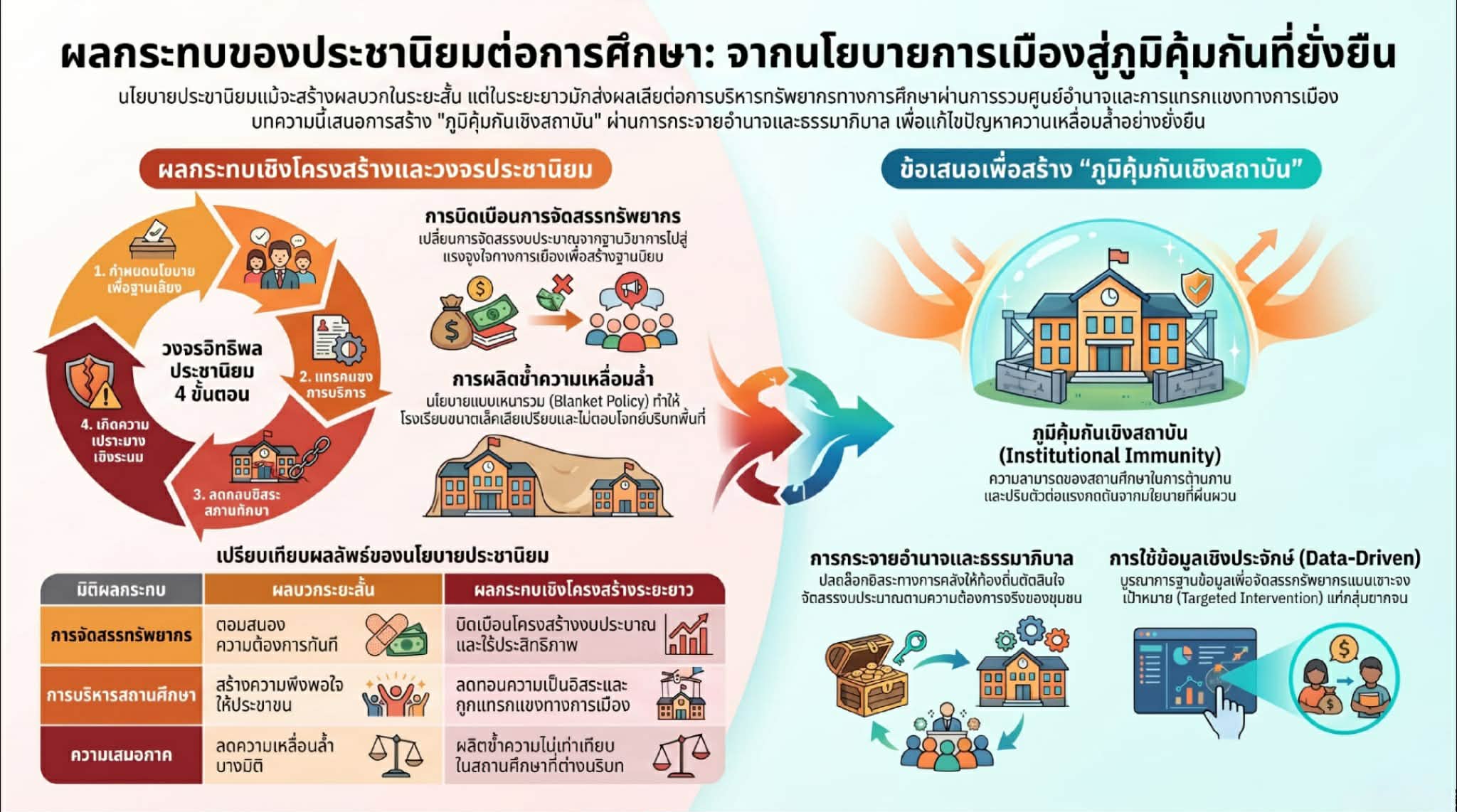
This academic article aims to analyze the impact of populist policies on the management of basic educational resources by employing an institutional analysis framework and political science perspectives. The findings indicate that populist policies function as both political instruments and policy mechanisms that can generate short-term benefits, particularly in addressing public needs and reducing certain aspects of inequality. However, in the long term, such policies tend to produce structural consequences, including distortions in resource allocation, political interference in educational administration, and the erosion of institutional autonomy. Furthermore, centralized and blanket policy approaches contribute to the reproduction of educational inequalities and create significant gaps between national policy objectives and local contexts, resulting in inefficient resource utilization. This article proposes policy recommendations focused on building “institutional immunity” through decentralization, strengthening good governance, enhancing transparency, and promoting civil society participation. These measures are essential for ensuring equity, efficiency, and sustainability in educational resource management in the long run.
References
ยุทธศาสตร์ หน่อแก้ว. (2563). การบริหารประเทศภายใต้แนวทางประชานิยม: บทเรียนความล้มเหลวจากต่างแดนกับการดำเนินนโยบายประชานิยมของรัฐบาลไทย. วารสารนิติ รัฐกิจ และสังคมศาสตร์ มหาวิทยาลัยราชภัฏเชียงราย, 4(2), 1–35.
ยุทธศาสตร์ หน่อแก้ว. (2562). โครงการประชารัฐ: นโยบายเชิงประชานิยมภายใต้รัฐธรรมนูญฉบับใหม่กับการสืบทอดอำนาจของคณะรักษาความสงบแห่งชาติ (คสช.). วารสารรัฐประศาสนศาสตร์ มหาวิทยาลัยราชภัฏเชียงราย, 2(1), 113–139.
มณี คงสิน. (2568). ผลกระทบของนโยบายประชานิยมต่อเสถียรภาพทางการเมืองของไทย: การวิเคราะห์เชิงโครงสร้างและพลวัตอำนาจ. วารสารรัฐศาสตร์และนิติศึกษา, 1(3), 1–10.
พระครูพิสุทธิธรรมาภรณ์ (ทองสะคม). (2567). ความท้าทายของประชานิยมต่อระบอบประชาธิปไตยเสรีนิยม. วารสารวิชาการจินตาสิทธิ์, 2(2). 132-143.
วิทวัส อภิญญานนท์. (2568). ลัทธิทรัมป์ในจุดจบของระเบียบโลกเสรีนิยมและเสรีนิยมใหม่ (?) กับการผงาดขึ้นของประชานิยมฝั่งขวา 2017-2025. วารสารประวัติศาสตร์ มศว, 50(1). 69-100.
สุนิสา โพธิ์ศรี, ศศิธร ศูนย์กลาง, และ ชัย สมรภูมิ. (2568). นโยบายประชานิยมของรัฐบาลแพทองธาร ชินวัตร: กรณีศึกษาเงินดิจิทัลวอลเล็ต. วารสารราชภัฏสุรินทร์วิชาการ, 3(6), 77–90.
ปภาวรินทร์ ลัดธรรม. (2568). อิทธิพลของพรรคการเมืองในกระบวนการสร้างนโยบายสาธารณะในประเทศไทย: การวิเคราะห์เชิงโครงสร้างและพลวัตอำนาจ. Journal of Political Science and Legal Studies, 1(3), 11–21.
ธนกร วรพิทักษานนท์. (2565). ความเหลื่อมล้ำทางทุนเศรษฐกิจกับการกวดวิชาของชนชั้นกลางในสภาวการณ์โรคระบาดโควิด-19. วารสารวิจัยสังคม, 45(1), 133–170.
พระณัฐวุฒิ พันทะลี, พระมหาวิรุธ วิโรจโน, สุขพัฒน์ อนนท์จารย์, อาทิตย์ แสงเฉวก, พระเดชา นามวงษา, และ วีรนุช พรมจักร์. (2566). ความเหลื่อมล้ำทางสังคมไทยในยุคชีวิตวิถีใหม่. วารสารสังคมศาสตร์ มหาวิทยาลัยมหามกุฏราชวิทยาลัย, 5(2), 185–209.
พระครูสุจิตพัฒนพิธาน, พระพินิจ ธีรภทฺโท, พนมพร เมฆพัฒน์, และ บุญเตือน ทรัพย์เพชร. (2567). นโยบายประชานิยมกับการจัดการความต้องการทางสังคม. วารสาร BU Academic Review, 23(1), 170–180.
ภูมิศรัณย์ ทองเลี่ยมนาค. (2565). ภาระค่าใช้จ่ายรับเปิดเทอม เรียนฟรี 15 ปี ไม่ใช่คำตอบ?. ThaiPublica. สืบค้นเมื่อ 15 เมษายน 2569, จาก https://thaipublica.org/2022/05/ research-eef-expenses-for-opening-semesters/
ธีระ รุญเจริญ. (2553). ความเป็นมืออาชีพในการจัดและบริหารการศึกษา: ยุคปฏิรูปการศึกษา. พิมพ์ครั้งที่ 6.
วีระศักดิ์ เครือเทพ. (2554). ประเด็นท้าทายการกระจายอำนาจและการปกครองท้องถิ่นไทย. ศูนย์ส่งเสริมนวัตกรรมและธรรมาภิบาลท้องถิ่น ภาควิชารัฐประศาสนศาสตร์ คณะรัฐศาสตร์ จุฬาลงกรณ์มหาวิทยาลัย.
สมพงษ์ จิตระดับ. (2565). MOU: ไขปัญหาความเหลื่อมล้ำ. หน่วยปฏิบัติการวิจัยเพื่อการพัฒนาด้านเด็กและเยาวชน คณะครุศาสตร์ จุฬาลงกรณ์มหาวิทยาลัย.
Downloads
Published
Issue
Section
License
Copyright (c) 2026 Journal of Sinsothon

This work is licensed under a Creative Commons Attribution-NonCommercial-NoDerivatives 4.0 International License.
Authors who publish with Journal of TCI agree to the following terms:
- Authors retain copyright and grant the journal right of first publication with the work simultaneously licensed under a Attribution-NonCommercial-NoDerivatives 4.0 International (CC BY-NC-ND 4.0) that allows others to share the work with an acknowledgment of the work's authorship and initial publication in this journal.
- Authors are able to enter into separate, additional contractual arrangements for the non-exclusive distribution of the journal's published version of the work (e.g., post it to an institutional repository or publish it in a book), with an acknowledgment of its initial publication in this journal.
- Authors are permitted and encouraged to post their work online (e.g., in institutional repositories or on their website) prior to and during the submission process, as it can lead to productive exchanges, as well as earlier and greater citation of published work.




