Educational Administration for Amidst Political Conflict and State Ideology: Roles and Challenges of School Administrators
Keywords:
Civic Education, Educational Administration, Political Conflict, State IdeologyAbstract
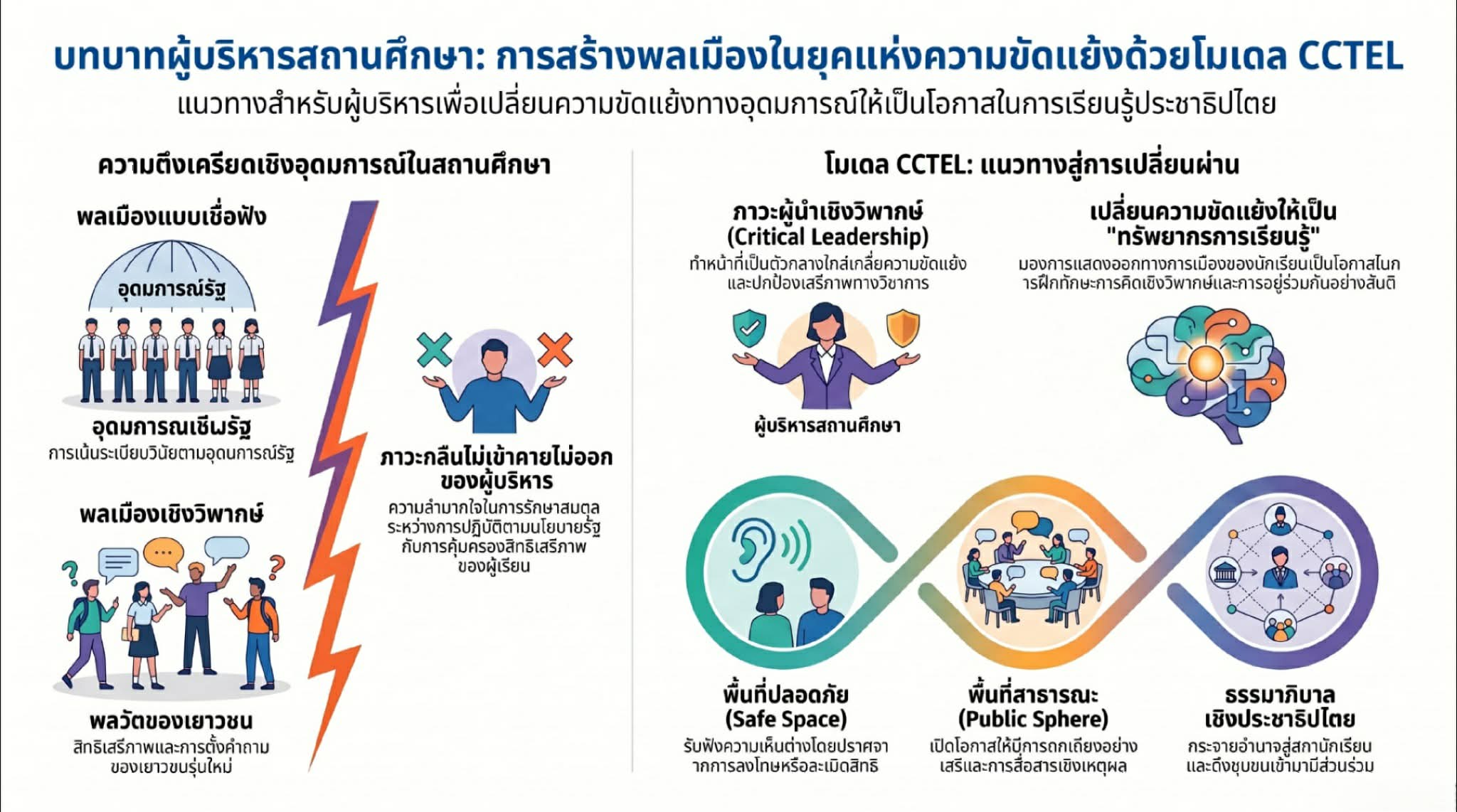
This academic article aims to critically analyze the roles and challenges of school administrators in managing civic education amidst political and ideological conflicts between the state and youth. By integrating the theory of Ideological State Apparatuses and the concept of the public sphere, the study explains the dynamics of power embedded within the educational system. The findings reveal that schools have transformed from knowledge-transmission institutions into arenas of ideological contestation between obedient citizenship and critical citizenship. Consequently, school administrators face a profound dilemma in balancing compliance with state policies and the protection of students’ rights and freedoms. This article proposes a novel conceptual framework, the “Civic-Conflict Transformative Educational Leadership Model (CCTEL Model),” which emphasizes transforming conflict into a democratic learning process. Within this model, administrators are expected to act as critical leaders and facilitators who establish safe spaces and democratic public spheres within schools, while promoting participatory governance and inclusive engagement among stakeholders. The key findings suggest that civic education in conflict-laden contexts must reconceptualize conflict as a pedagogical resource, foster critical thinking and peaceful coexistence among learners, and redefine educational leadership as an ethico political practice. Such an approach is essential for cultivating quality citizens and sustaining democratic society in the long term.
References
กณสิทธิ์ จตุเทน. (2569). ภาวะผู้นำเพื่อความยุติธรรมทางสังคม: การพัฒนาโครงสร้างเชิงกลยุทธ์เพื่อความเสมอภาคและการมีส่วนร่วมในสถานศึกษา. วารสารพุทธมัคค์, 12(1), 514–532.
กนกรัตน์ เลิศชูสกุล. (2564). สงครามเย็น (ใน) ระหว่างโบว์ขาว. มติชน.
กิตติพงษ์ โคตรจันทึก, รัดเกล้า แจ่มฤทธิ์, และ จันทิมา สุขสุคนธ์. (2567). แนวทางการศึกษารัฐศาสตร์ในศตวรรษที่ 21. วารสารมณีเชษฐาราม วัดจอมมณี, 7(1), 272–283.
กิตติวงค์ สาสวด, วรรณี นนท์ธนประกิจ, และ ซาฟีร่า อิแอ. (2568). ภาวะผู้นำเชิงสร้างสรรค์ของผู้บริหารสถานศึกษาโรงเรียนเอกชนในจังหวัดพัทลุง. วารสารบัณฑิตศึกษา มหาวิทยาลัยราชภัฏสวนสุนันทา, 18(2), 102–119.
จิรภา ประทุมมินทร์. (2565). อำนาจนิยม “ระบบการศึกษาไทย” ผ่านเครื่องแบบ ทรงผม หน้าเสาธง ไม้เรียว. โครงการวิจัยและพัฒนาวิชาการด้านการศึกษา.
ชัยณรงค์ เครือนวน และ พิมพ์ประไพ สนิทวงศ์ ณ อยุธยา. (2564). เศรษฐศาสตร์การเมืองว่าด้วยการพัฒนา: ศึกษาการพัฒนาเขตพัฒนาพิเศษภาคตะวันออก. วารสารการพัฒนาสังคมและกลยุทธ์การบริหาร, 23(2), 88–105.
นิพิฐพนธ์ นันทะวงศ์. (2567). อำนาจ ความรู้ และการสร้างภาพแทน: การวิเคราะห์เชิงวิพากษ์ต่อการนำเสนอประวัติศาสตร์ความขัดแย้งในแบบเรียนประวัติศาสตร์ของไทย เวียดนาม และกัมพูชา และผลกระทบต่อความสัมพันธ์ทวิภาคีระหว่างประเทศ. วารสารรัฐศาสตร์และรัฐประศาสนศาสตร์, 15(ฉบับเพิ่มเติม 2), 217–262.
ปาริษา มูสิกะคามะ. (2561). การกำกับดูแลพื้นที่สาธารณะเมืองในฐานะทรัพยากรร่วม. Built Environment Inquiry, 17(2), 1–13.
พงศธร สุรินทร์ และ สุนทรี โชติดิลก. (2566). ชุดความคิดที่ปรากฏในบทเพลงที่ผลิตโดยคณะรักษาความสงบแห่งชาติ: การศึกษาตามแนววาทกรรมวิเคราะห์เชิงวิพากษ์. วารสารวิชาการมนุษยศาสตร์และสังคมศาสตร์ มหาวิทยาลัยราชภัฏธนบุรี, 6(1), 38–52.
ภัทรพันธุ์ นิธิวรัตน์สกุล, และ ฆฬิสา สุธดาอนันตโภคิน. (2566). การแสดงออกทางการเมืองเชิงสัญลักษณ์: กรณีศึกษาอวัจนภาษาทางการเมืองของเยาวชนไทย. ใน เอกสารเผยแพร่ทางวิชาการ สถาบันวิจัยและพัฒนา มหาวิทยาลัยสุโขทัยธรรมาธิราช.
เลิศพร อุดมพงษ์. (2566). การศึกษาบทบาทของภาคประชาสังคมในการเสริมสร้างความมั่นคงทางสังคมและการพัฒนาประชาธิปไตย: กรณีองค์กรด้านการต่อต้านการทุจริตและส่งเสริมสังคมธรรมาภิบาล. วารสารสถาบันพระปกเกล้า, 21(1), 128–149.
วัชพล ตุลยวิไลกุล และ วัชรพงศ์ ศิริมาสกุล. (2567). การพัฒนาการจัดการเรียนรู้วิชาหน้าที่พลเมืองโดยใช้ฉากทัศน์เป็นฐานเพื่อสร้างทักษะการคิดเชิงวิพากษ์ของนักเรียนชั้นมัธยมศึกษาตอนปลาย. วารสารสังคมศาสตร์และวัฒนธรรม, 8(7), 208–217.
วาสนา ศรีจำปา. (2564). สิทธิชุมชนกับความเป็นพื้นที่สาธารณะของฮาเบอร์มาส: เครื่องมือในการต่อรองอำนาจรัฐ. วารสารความยุติธรรมทางสังคมและความเหลื่อมล้ำ, 2(3), 32–52.
วิชชาญ จุลหริก, จุไรรัตน์ วรรณยิ่ง, และ พรทิพย์ เจริญธรรมานนท์. (2568). ความท้าทายและแนวทางการพัฒนาการบริหารสถานศึกษาในยุคดิจิทัล: การวิเคราะห์เชิงวิพากษ์เพื่อการปรับตัวอย่างยั่งยืน. วารสารโพธิศาสตร์ปริทัศน์, 5(2), 1–12.
ศราวุธ ขันธวิชัย, พระสิริชัย ธมฺมจาโร (สายสงห์), พระสังวาน เขมปญฺโญ (สายเนตร), และ สมนึก จันทร์โสดา. (2565). ธรรมาภิบาลกับการเมืองการปกครองภายใต้ยุทธศาสตร์ประเทศไทย 4.0. วารสาร มจร อุบลปริทรรศน์, 7(1), 1253–1270.
ศิริสุดา สังข์งาม. (2568). การบูรณาการหลักอิทธิบาท 4 เพื่อส่งเสริมภาวะผู้นำเชิงสร้างสรรค์ของผู้บริหารสถานศึกษาในศตวรรษที่ 21. วารสารวิรุฬห์ศาสตร์ปริทัศน์, 1(3), 37–45.
สุธิดา พัฒนศรีวิเชียร. (2560). ความสำคัญของธรรมาภิบาล ประชาธิปไตย การมีส่วนร่วมของประชาชน และสื่อในการพัฒนา. วารสารมหาวิทยาลัยพายัพ, 27(1), 47–59.
เสรี รังสรรค์ และ ธีรภัทร์ เสรีรังสรรค์. (2561). การศึกษาทางการเมืองเพื่อสร้างความเป็นพลเมืองในระบอบประชาธิปไตย. วารสารสังคมศาสตร์ คณะรัฐศาสตร์ จุฬาลงกรณ์มหาวิทยาลัย, 48(2), 31–52.
Downloads
Published
Issue
Section
License
Copyright (c) 2026 Journal of Sinsothon

This work is licensed under a Creative Commons Attribution-NonCommercial-NoDerivatives 4.0 International License.
Authors who publish with Journal of TCI agree to the following terms:
- Authors retain copyright and grant the journal right of first publication with the work simultaneously licensed under a Attribution-NonCommercial-NoDerivatives 4.0 International (CC BY-NC-ND 4.0) that allows others to share the work with an acknowledgment of the work's authorship and initial publication in this journal.
- Authors are able to enter into separate, additional contractual arrangements for the non-exclusive distribution of the journal's published version of the work (e.g., post it to an institutional repository or publish it in a book), with an acknowledgment of its initial publication in this journal.
- Authors are permitted and encouraged to post their work online (e.g., in institutional repositories or on their website) prior to and during the submission process, as it can lead to productive exchanges, as well as earlier and greater citation of published work.




