The Role of Sangha Administrators in the Contemporary Social Context and the Effectiveness of Protecting the Thai Monastic Community
Keywords:
Modern Sangha Administrators, Intellectual Superpower, Soft Power, Artificial IntelligenceAbstract
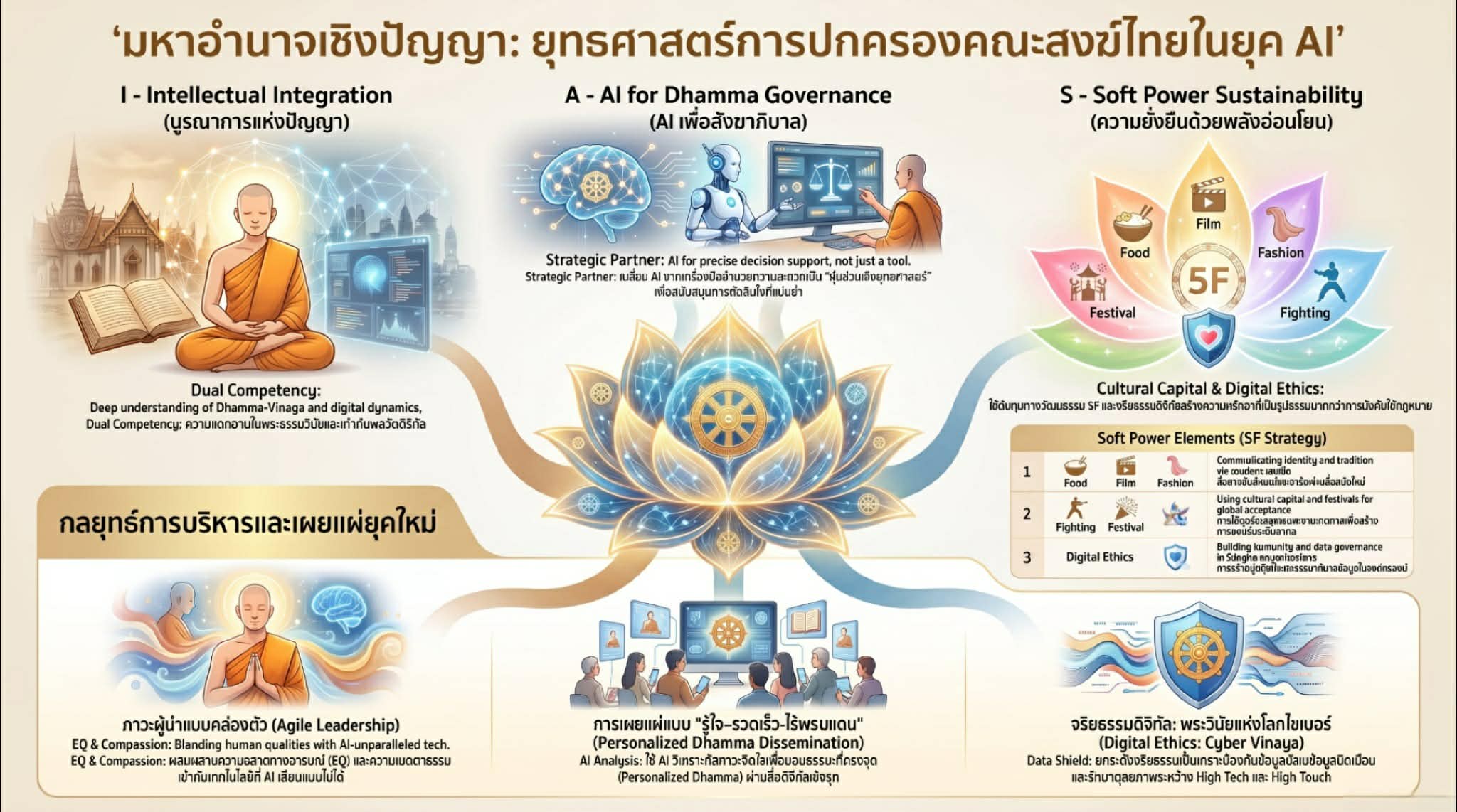
This academic article aims to examine the role of modern Sangha administrators in enhancing the effectiveness of protecting the Thai monastic community amidst the technological and economic fluctuations of contemporary society. Employing documentary analysis and the synthesis of modern management concepts, the study reveals that Sangha administrators must shift their governance paradigm from structural authority (Hard Power) to the creation of “Intellectual Superpower.” This transformation is achieved through the strategic integration of “Soft Power” and “Artificial Intelligence (AI).” The findings emphasize the necessity of cultivating Agile Leadership, which blends emotional intelligence with technology for precision decision-making. Furthermore, the study advocates for proactive communication through the “5F” cultural model and adherence to digital ethics, thereby establishing immunity and sustainability for the Thai Sangha in the 21st century.
References
กฤษดา มุงคุณ. (2568). ข้อพิพาทระหว่างประเทศเกี่ยวกับทรัพย์สินทางปัญญาที่ประเทศไทยมีส่วนเกี่ยวข้อง. วารสารกฎหมายสงขลานครินทร์, 8(1), 20–47.
ชนาธิป ทองประกอบ. (2568). การพัฒนาสมรรถนะการสื่อสารข้ามวัฒนธรรมเชิงกลยุทธ์ของผู้นำ Generation Y: กรอบแนวคิดเชิงบูรณาการในบริบทองค์กรระหว่างประเทศภายใต้พลวัตความไม่แน่นอนทางเศรษฐกิจ. วารสารสังคมพัฒนศาสตร์, 8(7), 262–275.
ชัยชนะ บุญสุวรรณ. (2568). การประยุกต์ใช้แบบจำลองต้นไม้ในปัญญาประดิษฐ์เพื่อการตัดสินใจแสดงความโกรธตามหลักพระพุทธศาสนา. วารสารนวังคสัตถุสาสน์ปริทรรศน์, 3(2), 142–152.
ณัทตรัยพัทธ์ ภัทร์พรชนัต. (2568). โอกาสและความท้าทายด้านจริยธรรมสื่อดิจิทัลในยุคปัญญาประดิษฐ์. วารสารราชพฤกษ์, 19(62), 547–558.
ธนกร สิริสุคันธา. (2568). การอาชีวศึกษาในฐานะกลไกขับเคลื่อนขีดความสามารถทางเศรษฐกิจของจีนในยุคแห่งนวัตกรรมเทคโนโลยี. วารสารสังคมศาสตร์ มหาวิทยาลัยมหามกุฏราชวิทยาลัย, 8(2), 311–329.
เผด็จ จงสกุลศิริ. (2568). จริยธรรมในการใช้เทคโนโลยีดิจิทัล: ความท้าทายและแนวทางในการสร้างสังคมดิจิทัลที่ยั่งยืน. วารสารพุทธพัฒนศาสตร์ศึกษา, 3(1), 1–22.
พรธิวา ปันนะสาร, สุวดี อุปปินใจ, และ ไพรภ รัตนชูวงศ์. (2568). การบริหารงานนิเทศการจัดการเรียนรู้โดยใช้ปัญญาประดิษฐ์สำหรับผู้บริหารสถานศึกษายุคใหม่. วารสารพัฒนศึกษาศาสตร์, 1(3), 54–65.
พระมหาดุริยะ กิตฺติสาโร (สังโยฆะ), พระมหาเตวิช โชติญาโณ (พันธ์เดช), พระมหาฉัตรชัย ธมฺมวรเมธี (ทันบาล), และ นิลาวัลย์ เหล่าทองสาร. (2568). การประยุกต์ใช้พุทธบริหารการศึกษาในการเผยแผ่พระพุทธศาสนาในยุคดิจิทัล. วารสารพุทธนวัตกรรมการศึกษา, 1(2), 61–74.
พระมหาบรรจง สุธีโร (ภูนาภิพัฒน์), อมรัชญา ชินศรี, ธีรพงษ์ แหวนเพ็ชร, กิติกุณ ประสังสิต, และ วิธวินท์ ภาคแก้ว. (2568). พระพุทธศาสนากับเทคโนโลยีดิจิทัล: โอกาสและความท้าทายในการเผยแผ่ธรรมะยุคใหม่. วารสารนิสิตวัง, 27(2), 144–155.
พิชญุตม์ เนรมิตกันทร, ณัฐเรีย ชินโกอิ, ธนกฤต นิวิฐชยางกูล, สาริณี พฤกษา, และ ณัฐชา พูนผล. (2568). การประยุกต์ใช้ปัญญาประดิษฐ์ (AI) ในการบริหารจัดการสนามบินเพื่อเพิ่มประสิทธิภาพการดำเนินงาน. วารสารส่งเสริมและพัฒนาวิชาการสมัยใหม่, 3(2), 1091–1109.
วสุนันท์ มงคลนำ และ ดลศักดิ์ ไทรเล็กทิม. (2568). แนวทางการใช้เทคโนโลยีปัญญาประดิษฐ์ (AI) เพื่อเพิ่มประสิทธิภาพการบริหารงานวิชาการของผู้บริหารสถาบันอุดมศึกษาในกำกับของรัฐ. วารสารวิชาการศึกษาศาสตร์ ศรีนครินทรวิโรฒ, 26(2), 94–117.
สมชาย เทพแสง, อัจฉริยา เทพแสง, และ กันต์ฐมณียา นฤโฆษกิตติกีรติ. (2567). พลังอ่อนโยน (Soft power): กลยุทธ์ของภาวะผู้นำในยุคปัญญาประดิษฐ์ (Artificial intelligence: AI). วารสารสหวิตยาการวิจัยและนวัตกรรมการศึกษา, 3(2), 1–14.
สมพงษ์ แซ่ท้อ, พัสกร อุ่นกาศ, สมชาย มะรินทร์, ประวิทย์ เอกเจริญสุข, และ วชิรญาณ์ รักบิดา. (2568). อริยสัจ 4 กับการสร้างกรอบการตัดสินใจเชิงปัญญาในการบริหารองค์กรยุค AI. วารสารส่งเสริมและพัฒนาวิชาการสมัยใหม่, 3(6), 612–628.
สามเณรสุขสวรรค์ พรหมทอง, ประดิษฐ์ คำมุงคุณ, และ วราสายะ วราสยานนท์. (2568). การบูรณาการเทคโนโลยีดิจิทัลในการพัฒนาทักษะภาษาอังกฤษเพื่อการเผยแผ่พระพุทธศาสนาระดับนานาชาติ. พระพุทธศาสนากับปัญญาประดิษฐ์, 2(1), 293–302.
เสาวนีย์ มิตตะธรรมกุล. (2567). การบริหารจัดการทุนมนุษย์ในยุคปัญญาประดิษฐ์. วารสารสหวิทยาการนวัตกรรมปริทรรศน์, 7(5), 406–420.
Downloads
Published
Issue
Section
License
Copyright (c) 2026 Journal of Sinsothon

This work is licensed under a Creative Commons Attribution-NonCommercial-NoDerivatives 4.0 International License.
Authors who publish with Journal of TCI agree to the following terms:
- Authors retain copyright and grant the journal right of first publication with the work simultaneously licensed under a Attribution-NonCommercial-NoDerivatives 4.0 International (CC BY-NC-ND 4.0) that allows others to share the work with an acknowledgment of the work's authorship and initial publication in this journal.
- Authors are able to enter into separate, additional contractual arrangements for the non-exclusive distribution of the journal's published version of the work (e.g., post it to an institutional repository or publish it in a book), with an acknowledgment of its initial publication in this journal.
- Authors are permitted and encouraged to post their work online (e.g., in institutional repositories or on their website) prior to and during the submission process, as it can lead to productive exchanges, as well as earlier and greater citation of published work.




