The Role of Sangha Administrators in the Contemporary Social Context and the Effectiveness of Protecting the Thai Monastic Community
Keywords:
Sangha Administrators, Thai Monastic Community, Contemporary Society, Sangha Protection, Good GovernanceAbstract
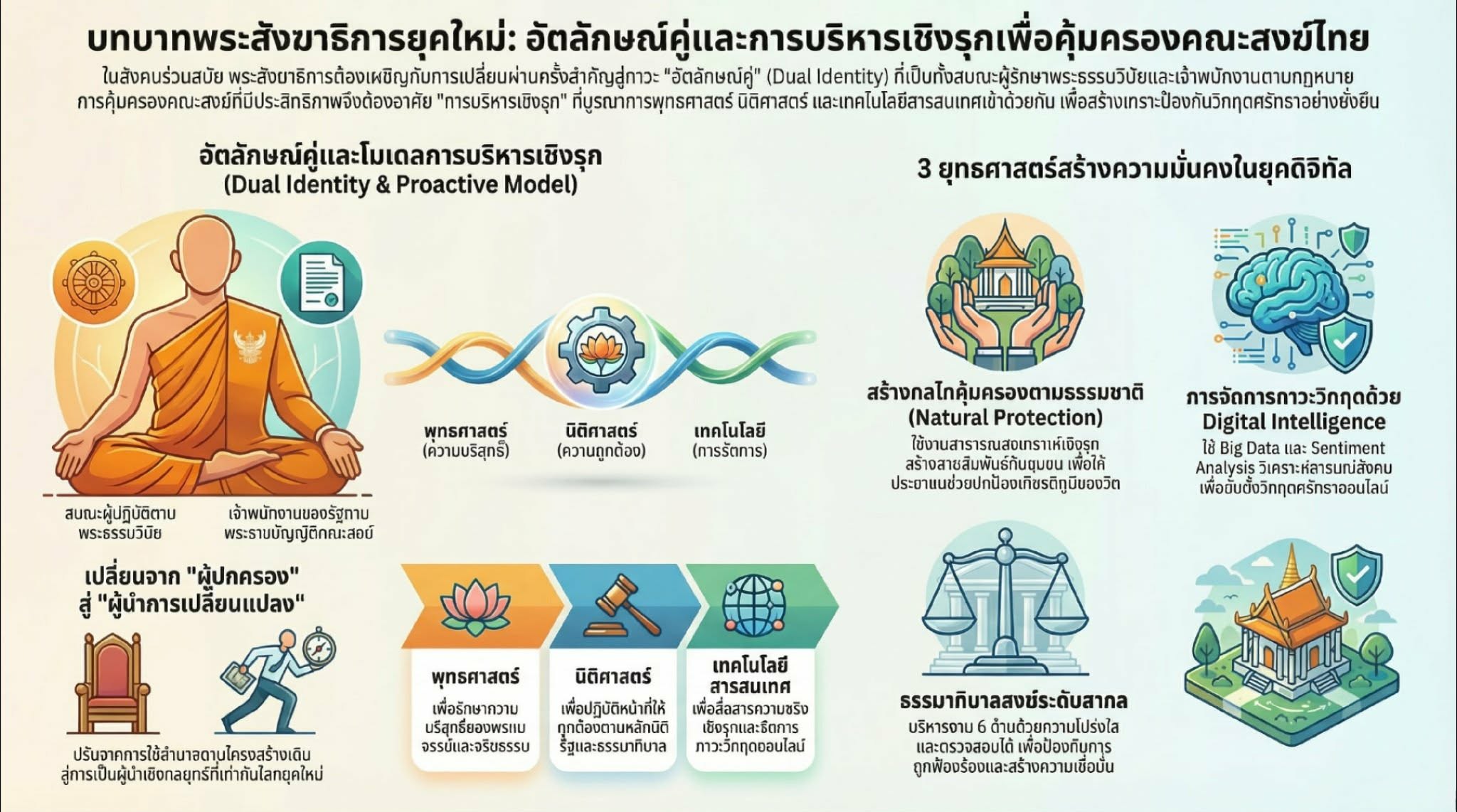
This academic article aims to examine the role of Sangha administrators in the contemporary social context and its relationship with the effectiveness of protecting the Thai monastic community. The study is situated amid profound social, economic, technological, and cultural transformations that directly influence the administrative structure of the Sangha and the public image of Buddhism. Utilizing a qualitative approach through the analysis of academic literature, Sangha legislation, and organizational management concepts, the findings reveal that Thai monks currently hold a "dual identity" acting as both practitioners of Dhamma-Vinaya and as state officials under secular law. Consequently, modern Sangha administrators must shift from traditional structural governance to a "proactive management" model. This involves integrating Buddhist principles, legal expertise, and information technology. Emphasizing the six areas of Sangha affairs through good governance, transparency, and digital crisis management using Big Data is essential. Such adaptation fosters social resilience and establishes a natural protection mechanism through proactive public welfare, ultimately ensuring the sustainable and effective safeguarding of the Thai Sangha in the digital era.
References
จิรายุทธ เยี่ยมสวน, อภิชิต เหมือยไธสง, และ พระวิชรญาณวิสุทฺธิญาโณ (โม้แหยม). (2568). สถานะทางกฎหมายของพระสงฆ์: ความซับซ้อนของการบังคับใช้กฎหมายทางโลกและผลกระทบต่อการปกครองคณะสงฆ์. วารสารสินธุ์โสธร, 1(3), 36-46.
จุติพร ปริญโญกุล, และ ธาตรี ใต้ฟ้าพูล. (2568). การจัดการภาวะวิกฤตออนไลน์ทางการเมืองด้วยบิ๊กดาต้า: กรณีศึกษาบริบทสังคมไทยยุคดิจิทัล. วารสารสถาบันวิจัยและพัฒนา มหาวิทยาลัยราชภัฏบ้านสมเด็จเจ้าพระยา, 10(2), 43-61.
พระครูวิสาลสรนาท (อุดม อติพโล). (2568). วิเคราะห์การปกป้องคุ้มครองคณะสงฆ์ในคัมภีร์พระพุทธศาสนา. วารสารนวังคสัตถุศาสน์ปริทรรศน์, 3(2), 183-197.
พระครูสมุห์กรณ์พัฒน์ กนฺตวณฺโณ, และ พิชญกัญญา กองนิล. (2568). การวิเคราะห์ผลกระทบของแผนปฏิรูปกิจการคณะสงฆ์ในยุคใหม่สู่สาธารณะสงเคราะห์. วารสารพุทธนวัตกรรมและการจัดการ, 8(2), 243-256.
พระมหาสมพาร จิตฺตสํวโร, พระเทพวัชรสารบัณฑิต (ประสาร จนฺทสาโร), และ ประเสริฐ ธิลาว. (2568). การพัฒนาศักยภาพการปกครองคณะสงฆ์ของพระสังฆาธิการในอำเภอวังน้ำเย็น จังหวัดสระแก้ว. วารสารพุทธนวัตกรรมและการจัดการ, 8(4), 112-126.
พระราชเมธีวชิรดิลก (ไพจิตร สาฆ้อง), พระกิตติสารสุธี (เชิดชัย แก้วอาษา), พระครูสุภัทรสีลโสภณ (สายัณห์ วงศ์สุรินทร์), พระมหาทศพร สุมุทุโก (อ่อนน้อม), และ สำราญ ศรีคำมูล. (2568). การบริหารการศึกษาคณะสงฆ์ในยุคแห่งการเปลี่ยนแปลง. วารสารมณีเชษฐาราม วัดจอมมณี, 8(6), 1127-1141.
ภคพล ชินโสภา, พระครูประยุตสารธรรม, อภิชิต เหมือยไธสง, และ พระวิชรญาณวิสุทฺธิญาโณ (โม้แหยม). (2568). หลักศาสนาในกรอบกฎหมายต่อการเผยแผ่พระพุทธศาสนาภายใต้กฎหมายคณะสงฆ์และกฎหมายระหว่างประเทศ. วารสารสินธุ์โสธร, 1(3), 95-106.
รณกร นาคเกลี้ยง, ดรุณี ทองสุข, ชลรดา ประสิทธิ์แสงอารีย์, และ รัฐพงศ์ มีสิทธิ์. (2568). การประเมินความยืดหยุ่นของการจราจรบนทางพิเศษเมื่อเกิดเหตุขัดข้อง กรณีศึกษาการประยุกต์ใช้ช่องทางจราจรที่สามารถปรับเปลี่ยนทิศทาง. ใน รายงานสืบเนื่องจากการประชุมวิศวกรรมโยธาแห่งชาติ ครั้งที่ 30 (เล่มที่ 30).
วิชญะ ยศกาศ และ พระครูโกวิทอรรถวาที. (2568). ความยากลำบากของพระสงฆ์ในการใช้ชีวิตในสังคมไทย. วารสาร มจร โกศัยปริทรรศน์, 3(1), 85-94.
Samahito, P. S. (2568). การเสริมสร้างกิจการคณะสงฆ์ตามหลักพระพุทธศาสนา. Mahachula Academic Journal, 12(1).
Sodamak, H. (2568). ปัญหาทางกฎหมายเกี่ยวกับการประกันภัยธุรกิจหยุดชะงักในประเทศไทย กรณีศึกษาการหยุดชะงักของธุรกิจจากคำสั่งนายทะเบียนที่ 24/2564. Journal of Social Science for Local Development Rajabhat Maha Sarakham University, 9(2), 590-606.
Downloads
Published
Issue
Section
License
Copyright (c) 2026 Journal of Sinsothon

This work is licensed under a Creative Commons Attribution-NonCommercial-NoDerivatives 4.0 International License.
Authors who publish with Journal of TCI agree to the following terms:
- Authors retain copyright and grant the journal right of first publication with the work simultaneously licensed under a Attribution-NonCommercial-NoDerivatives 4.0 International (CC BY-NC-ND 4.0) that allows others to share the work with an acknowledgment of the work's authorship and initial publication in this journal.
- Authors are able to enter into separate, additional contractual arrangements for the non-exclusive distribution of the journal's published version of the work (e.g., post it to an institutional repository or publish it in a book), with an acknowledgment of its initial publication in this journal.
- Authors are permitted and encouraged to post their work online (e.g., in institutional repositories or on their website) prior to and during the submission process, as it can lead to productive exchanges, as well as earlier and greater citation of published work.




