A Strategy for Developing Buddhist Innovation for the Sustainability of Thai Society in the 21st Century
Keywords:
Buddhist Innovation, Sustainability, Development Strategy, 21st Century Thai SocietyAbstract
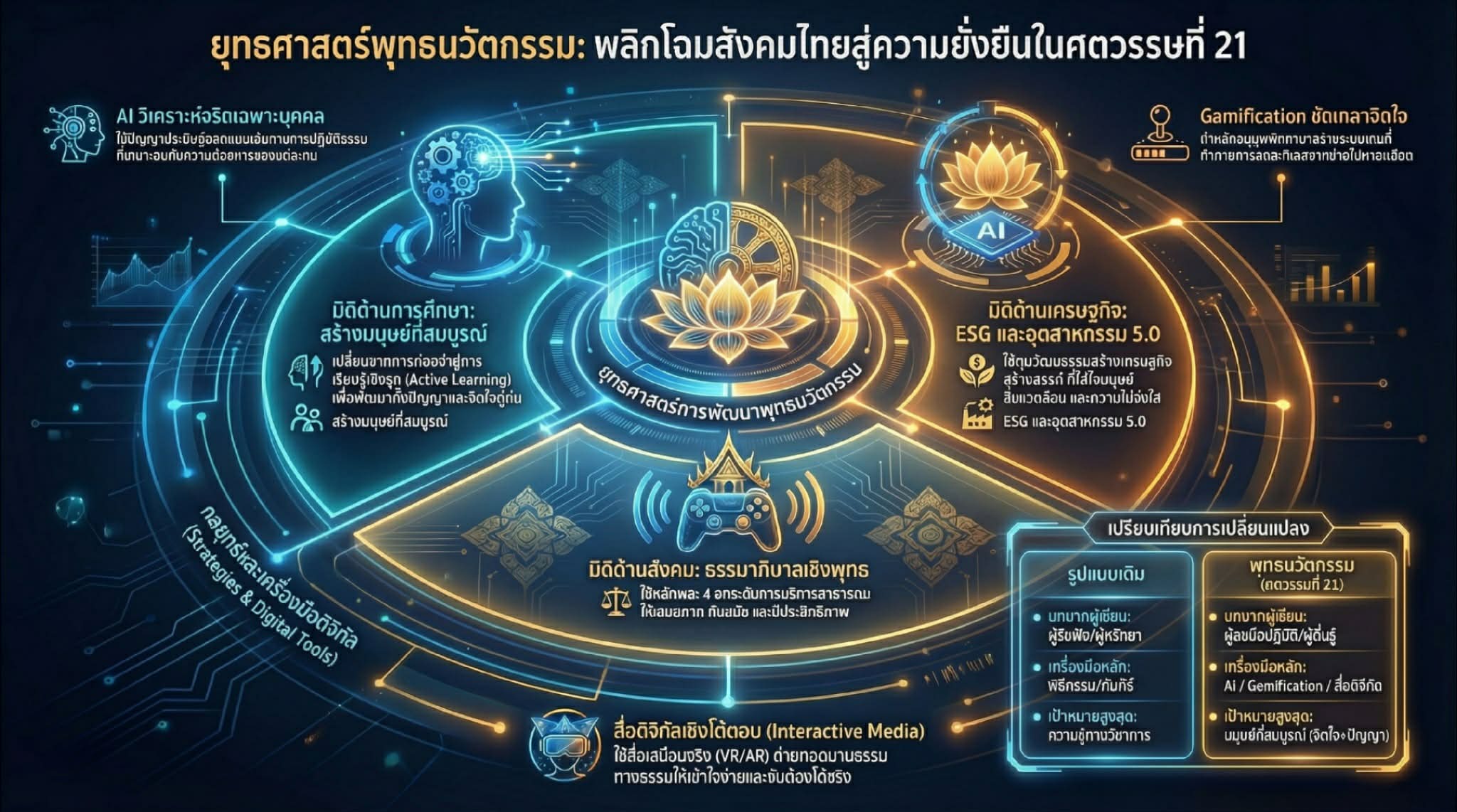
This article aims to propose strategies for developing Buddhist Innovation to enhance the sustainability of Thai society in the 21st century. It emphasizes the integration of Buddhist principles with modern science, technology, and management paradigms to address the dynamics of digital disruption. The study covers driving forces in three key dimensions: 1) Education, focusing on the transition from academic-centric approaches to cultivating "complete human beings" through Buddhist teaching methods combined with technology for intellectual and spiritual development; 2) Economy, highlighting the transformation of cultural capital into the creative economy and business management based on ESG and Industry 5.0 principles for community and environmental sustainability; and 3) Social Governance, applying Dhamma principles to improve public service efficiency and foster peaceful coexistence. The conclusion suggests that Buddhist Innovation serves as a crucial mechanism to balance material progress with mental well-being, thereby fostering quality human resources and a resilient wisdom-based society.
References
เซียว ซี เชิ่น, วันชัย แก้วแสน, และ ชาญสิทธิ์ เจริญธรรมานนท์. (2568). การบริหารธุรกิจอย่างยั่งยืนในศตวรรษที่ 21: การบูรณาการแนวคิด ESG เพื่อสร้างความได้เปรียบทางการแข่งขัน. วารสารโพธิศาสตร์ปริทัศน์, 5(2), 139-152.
ตรีทิพย์นภา ทองดี. (2568). แนวทางการพัฒนาคุณธรรมจริยธรรมสำหรับเยาวชนไทยในศตวรรษที่ 21. วารสารสื่อวิชาการและวิจัย, 1(2), 33-42.
ปารินันท์ ปางทิพย์อำไพ. (2565). พุทธนวัตกรรมในการสร้างแหล่งเรียนรู้ที่ยั่งยืน. วารสารศิลปศาสตร์ มหาวิทยาลัยแม่โจ้, 10(1). https://so07.tci-thaijo.org/index.php/basj/article/view/5820
ปารินันท์ ปางทิพย์อำไพ. (2567). พุทธนวัตกรรมในการสร้างแหล่งเรียนรู้ที่ยั่งยืน. วารสารพุทธอาเซียนศึกษา, 9(2).
พระพรหมบัณฑิต (ประยูร ธมฺมจิตฺโต). (2567). พุทธนวัตกรรมกับการสร้างสังคมสันติสุขอย่างยั่งยืน. มหาวิทยาลัยมหาจุฬาลงกรณราชวิทยาลัย. สืบค้นเมื่อ 20 มกราคม 2569, จาก https://www. youtube.com/watch?v=20mDDUmejdw
พระมหาชนินทร์ อธิวโร, อรอนงค์ วูวงศ์, กิตติธัช ตันมา, และ รพีพร เสาร์แดน. (2568). การบูรณาการพุทธนวัตกรรมในกระบวนการเรียนการสอนในอนาคต. วารสาร มจร โกศัยปริทรรศน์, 3(2), 199-213.
พระมหาอภิชาติ ชยเมธี (ถาวร), และ ธนานพ เสนาชุม. (2568). พุทธวิธีการพัฒนาสื่อนวัตกรรมการจัดการเรียนรู้วิชาพระพุทธศาสนาสำหรับผู้เรียนในศตวรรษที่ 21. วารสารวิจัยนวัตกรรมการศึกษาและเทคโนโลยี, 3(3), 1-11.
พระวัชรินทร์ วชิรวํโส (ชุมจีน), พระครูบวรชัยวัตร, พระครูศรีรัตนาภิรมย์, และ พระครูสมุห์ดิเรกฤทธิ์ ธีรปญฺโญ. (2567). พุทธนวัตกรรมและการวิจัยข้ามศาสตร์. วารสารมณีเชษฐาราม วัดจอมมณี, 7(5), 1072-1088.
ภูรีภัทร ห้วยหงษ์ทอง, และ กรกต ชาบัณฑิต. (2568). พุทธนวัตกรรมเพื่อการส่งเสริมประสิทธิภาพการปฏิบัติงานของบุคลากรเทศบาลในจังหวัดนครปฐม. วารสารสหวิทยาการนวัตกรรมปริทรรศน์, 8(2), 28-39.
สมควร นามสีฐาน, และ สุรีพร ชาบุตรบุณฑริก. (2562). กลยุทธ์การสอนสังคมศึกษาสู่การพัฒนานวัตกรรมการจัดการเรียนรู้ตามแบบพุทธวิธี. Journal of Graduate MCU KhonKaen Campus, 6(2), 42-55.
สิทธิชัย ชีวะโรรส, พระครูปะโชติกิจจาภรณ์ (สุริยัญ ชูช่วย), ณิชารีย์ ปรีชา, พระครูพรหมเขตคณารักษ์ (ชัยสิทธิ์ เรืองรอด), และ ณรงค์ เบ็ญจศักดิ์. (2568). “พลวัตแห่งภาษา” ปฏิรูปการเรียนรู้ภาษาอังกฤษในศตวรรษที่ 21 บนฐานคิดแบบองค์รวมเพื่อความยั่งยืนทางปัญญา. วารสารสังคมพัฒนศาสตร์, 8(10), 205-213.
สุรเดช หวังทอง, ณัฐปภัสษ์ จุ้ยเจริญ, และ ณัฐวุฒิ โรจน์นิรุตติกุล. (2567). ความท้าทายของการจัดการอุตสาหกรรม 5.0 เพื่อความยั่งยืนในศตวรรษที่ 21. Journal of Graduate Studies Valaya Alongkorn Rajabhat University, 18(2), 286-301.
เสาวนีย์ มิตตะธรรมากุล. (2567). การพัฒนาพุทธนวัตกรรมการจัดการคลินิกทันตกรรมในกรุงเทพมหานคร. วารสารพุทธนวัตกรรมและการจัดการ, 7(5), 316-328.
โสภา รักบำรุง, ไพรัตน์ ฉิมหาด, พระวัชรพุทธิบัณฑิต (ปรีดา บัวเมือง), บุญวัตร ผิวขำ, และ ครองรัฐ ใจเรือง. (2568). วัวชนในบริบทการพัฒนาเศรษฐกิจชุมชน: แนวทางใหม่ของเกษตรกรไทยในศตวรรษที่ 21. วารสารสังคมพัฒนศาสตร์, 8(8), 334-344.
Buddhist Research Institute of MCU. (2025). Buddhist environmentalism and circular innovation: A case study of Thai communities. https://so08.tci-thaijo.org/ index.php/romyoongthong/article/download/5397/4007
Downloads
Published
Issue
Section
License
Copyright (c) 2026 Journal of Sinsothon

This work is licensed under a Creative Commons Attribution-NonCommercial-NoDerivatives 4.0 International License.
Authors who publish with Journal of TCI agree to the following terms:
- Authors retain copyright and grant the journal right of first publication with the work simultaneously licensed under a Attribution-NonCommercial-NoDerivatives 4.0 International (CC BY-NC-ND 4.0) that allows others to share the work with an acknowledgment of the work's authorship and initial publication in this journal.
- Authors are able to enter into separate, additional contractual arrangements for the non-exclusive distribution of the journal's published version of the work (e.g., post it to an institutional repository or publish it in a book), with an acknowledgment of its initial publication in this journal.
- Authors are permitted and encouraged to post their work online (e.g., in institutional repositories or on their website) prior to and during the submission process, as it can lead to productive exchanges, as well as earlier and greater citation of published work.




