The Influence of Buddhism on Contemporary Thai Literature and Art
Article Sidebar
Main Article Content
Abstract
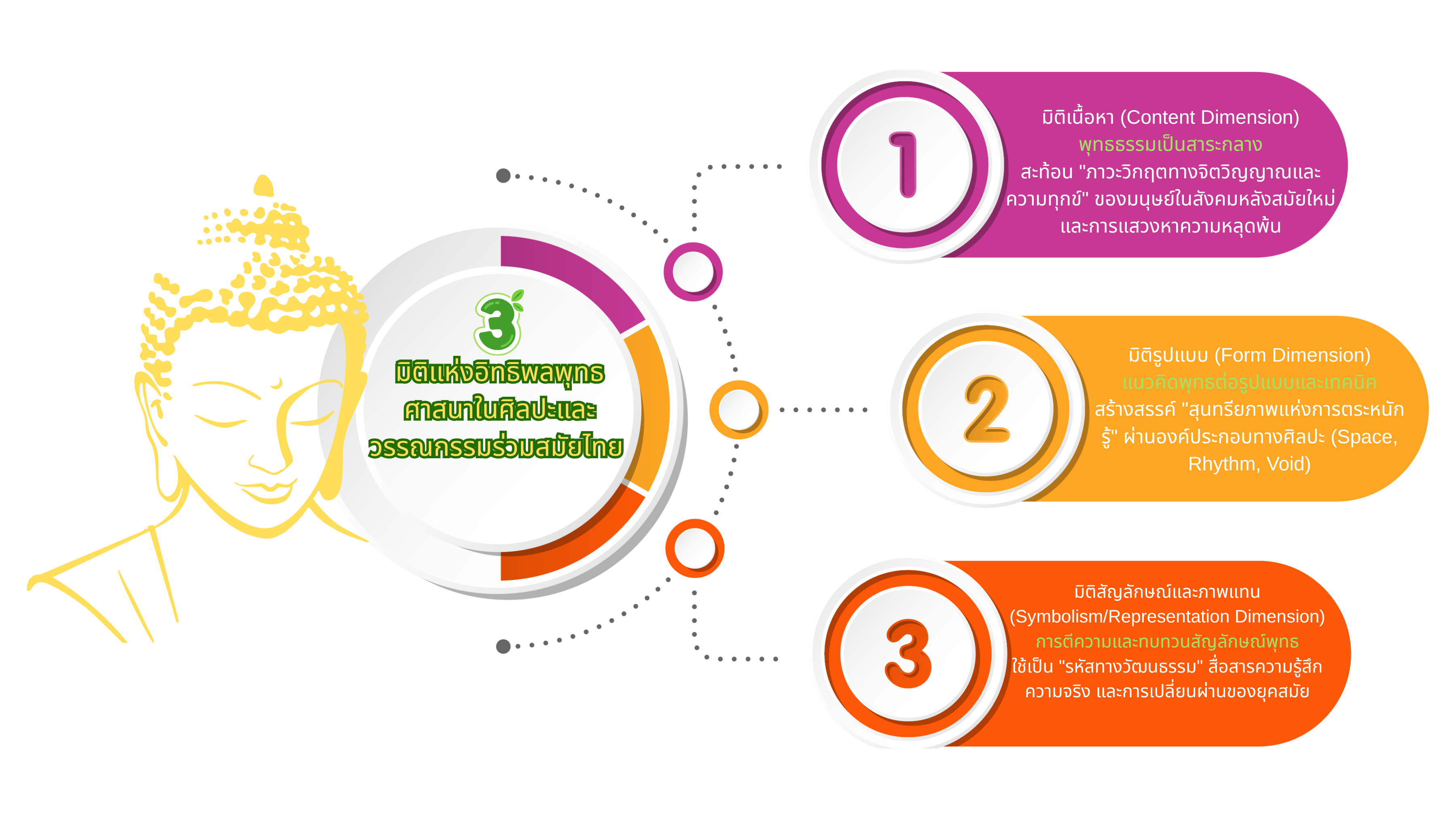
This academic article presents a newly constructed knowledge model entitled “The Influence of Buddhism in the Creation of Contemporary Thai Literature and Art”. The objective is to conceptualize Buddhism as a cultural mechanism that significantly shapes creative production in Thailand’s contemporary context. Rather than being confined to ritualistic or belief-based functions, Buddhism is interpreted here as a Cultural Reference Framework deeply embedded in Thai ways of life. It influences not only the thematic dimensions of creative works but also their form and symbolic representation across literary and visual art practices. The proposed model is structured around three key dimensions: (1) Thematic Dimension – Buddhist doctrines such as anicca (impermanence), dukkha (suffering), and anatta (non-self) appear as core content that reflects spiritual crises and human suffering in postmodern society; (2) Stylistic Dimension – Buddhist thought influences artistic techniques and compositional forms, such as mindful spacing in poetry, the use of empty space in painting, or mixed media installations to convey emptiness and non-attachment; and (3) Symbolic-Representational Dimension – traditional Buddhist symbols such as the lotus, Dharma wheel, or the Buddha image are reinterpreted as cultural codes to critique and reflect on social transformation. This body of knowledge argues that Buddhism has transitioned from being a static religious identity to an active discursive mechanism capable of driving cultural and political expression through contemporary art and literature. It facilitates a cultural space where artists and writers challenge materialism, consumerism, and institutional power structures through the aesthetic lenses of mindfulness, compassion, and transcendence. Therefore, Buddhism remains a dynamic and adaptive force in preserving and reconfiguring Thai cultural identity in meaningful dialogue with the realities of modern global society.
Article Details

This work is licensed under a Creative Commons Attribution-NonCommercial-NoDerivatives 4.0 International License.
References
คณปกรณ์ จันทร์สมบูรณ์. (2568). คำต่างภาษาในภาษาล้านนา: กรณีศึกษา “พจนานุกรมอังกฤษ-ล้านนา”. ภาษา-จารึก, 2(1), 177–210.
จิรวัฒน์ การนอก. (2567). การพัฒนาลวดลายจิตรกรรมฝาผนังพระอุโบสถวัดสุทัศนเทพวรารามราชวรมหาวิหาร ไปสู่ผลงานจิตรกรรมไทยร่วมสมัย. Suan Sunandha Asian Social Science, 18(2), 32–42.
จิราภรณ์ ขนาดนิด. (2568). บทบาทพิพิธภัณฑ์พื้นบ้านและพระสงฆ์ต่อการอนุรักษ์โบราณสถานและโบราณวัตถุในประเทศไทย. วารสารเสียงธรรมจากมหายาน, 11(5), 354–365.
ฉลองเดช คูภานุมาต. (2561). การสร้างสรรค์ศิลปะร่วมสมัยจากแนวคิดคติจักรวาลวิทยาในพุทธศาสนา. วารสารพัฒนศิลป์วิชาการ, 2(พิเศษ), 237–248.
นที มณฑลวิทย์. (2568). ปรากฏเกม: ปรากฏการณ์จากความเป็นไทยสู่สังคมดิจิทัลในวัฒนธรรมสมัยนิยม. วารสารกองทุนพัฒนาสื่อปลอดภัยและสร้างสรรค์, 4(1), 131–161.
นวลวรรณ พูนวสุพลฉัตร. (2563). การศึกษาปัจจัยที่มีอิทธิพลต่อการพระราชนิพนธ์เรื่องไตรภูมิพระร่วง. วารสาร มจร บาฬีศึกษาพุทธโฆสปริทรรศน์, 6(2), 71–83.
พงษพร ศรีแก้ว. (2563). มรดกภูมิปัญญาไทยในวรรณคดีที่มีอิทธิพลต่อวิถีสังคมไทย. วารสารบัณฑิตแสงโคมคำ, 5(1), 171–185.
พระครูปัญญาสารบัณฑิต. (2565). วิเคราะห์พระพุทธศาสนาที่มีอิทธิพลกับสังคมสมัยกรุงสุโขทัยและอยุธยา. วารสาร มจร อุบลปริทรรศน์, 7(3), 567–576.
พระอภิภู บุญทาหลู่, สิริรัญญา ณ เชียงใหม่, และ ลิปิกร มาแก้ว. (2568). การสร้างสรรค์ผลงานศิลปะร่วมสมัยโดยใช้แนวคิดที่ได้จากการปริวรรตพระธรรมใบลานล้านนา เรื่องกุสสะราช. วารสารพุทธศิลปกรรม, 8(1), 1–24.
