Buddhism and Cultural Value Shifts in Urban Thai Society Chiang Mai University
Article Sidebar
Main Article Content
Abstract
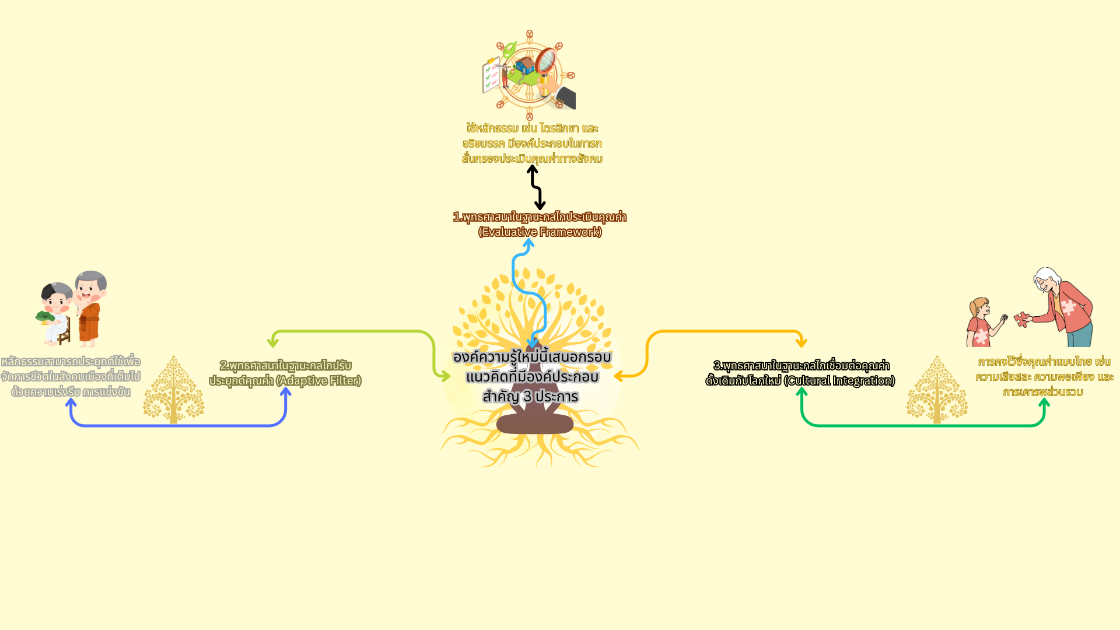
This academic article presents a new body of knowledge on the role of Buddhism in managing cultural values within the context of urban Thai society amid globalization. Thai urban society, characterized by its dynamic nature and rapid changes in economy, technology, and lifestyles, has led to significant shifts in cultural values. The synthesis from the article "Buddhism and the Transformation of Cultural Values in Thai Urban Society" provides a conceptual model highlighting Buddhism’s potential as an ethical and cultural mechanism to guide, evaluate, and integrate evolving social values without losing the foundation of traditional Thai culture. The proposed knowledge model outlines three key conceptual frameworks: (1) Buddhism as an Evaluative Framework, where core Buddhist teachings—such as the Threefold Training (Tri-Sikkha) and the Noble Eightfold Path—serve to assess the alignment of new values with ethical principles and sustainable well-being; (2) Buddhism as an Adaptive Filter, where teachings like the Four Bases of Success (Iddhipada) offer practical tools for self-management and mindfulness in the fast-paced and diverse urban context; and (3) Buddhism as Cultural Integration, which enables the continuity of traditional Thai values—such as selflessness, moderation, and communal respect—while adapting them to contemporary urban realities through lived Buddhist practice. This new knowledge holds significant implications for public policy design, urban education curriculum development, and moral enrichment initiatives in urban communities. It aims to empower citizens with cultural resilience and adaptive capacity, rooted in Thai identity and guided by Buddhist ethical principles.
Article Details

This work is licensed under a Creative Commons Attribution-NonCommercial-NoDerivatives 4.0 International License.
References
ดิเรก ด้วงลอย, พระปลัดระพิน พุทฺธิสาโร, และมัลลิกา ภูมะธน. (2568). กฎต้องเป็นกฎ: พระพุทธเจ้าสอนภาวะผู้นำเชิงพุทธ พันท้ายนรสิงห์ปฏิบัติ. วารสารมนุษยวิชาการ, 2(2), 25–39.
ปัญญา เรือนดี. (2567). การพัฒนาคุณภาพชีวิตของเยาวชนไทยยุคใหม่ให้บรรลุผลอย่างเป็นรูปธรรม. วารสารไตรศาสตร์, 10(2), 32–53.
พระธรรมปิฎก (ป.อ.ปยุตโต), การพัฒนาที่ยั่งยืน, พิมพ์ครั้งที่ 2, (กรุงเทพมหานคร : สำนักพิมพ์มูลนิธิพุทธธรรม, 2539), 248–257.
พระเทพเวที (ประยุทธ์ ปยุตฺโต), พุทธศาสนากับการพัฒนามนุษย์, (กรุงเทพมหานคร : โรงพิมพ์บริษัทสหธรรมิก จำกัด, 2536), 34–36.
พิชชากร ตะนุสะ. (2568). การเรียนรู้ศิลปวัฒนธรรมชุมชนและท้องถิ่น กรณีศึกษา ประเพณีชักพระตักบาตรเทโว จังหวัดสงขลา. วารสารสังคมศึกษาปริทรรศน์, 1(2), 136–146.
พระปลัดสมศักดิ์ กตธมฺโม (โสรัตน์ถาวร). (2568). การบูรณาการการเรียนการสอนรายวิชาสังคมศึกษากับพระพุทธศาสนาและพระวินัย. วารสารสหวิทยาการศึกษาครุศาสตร์, 1(2), 21–27.
พระมหาธีระพงษ์ กตเมธี (คืนรัมย์). (2568). การเสริมสร้างการตื่นรู้เบิกบานในการเรียนรู้สำหรับนักเรียนโรงเรียนปริยัติธรรม. วารสารสหวิทยาการศึกษาครุศาสตร์, 1(2), 39–48.
มุจจรินทร์ ทัศดรกุลพัฒน์. (2568). ภาวะผู้นำยุคดิจิทัลกับรัฐศาสตร์ตามแนวพระพุทธศาสนาในบริบทประเทศไทย. วารสารสังคมศึกษา ศาสนา และวัฒนธรรม, 6(1), 143–152.
สายฝน บุษบรรณ์, พระศรีสมโพธิ (วรัญญู สอนชุน), และสามารถ สุขุประการ. (2568). แนวทางการพัฒนาทักษะภาษาอังกฤษเพื่อการเผยแผ่พระพุทธศาสนา สำหรับพระวิปัสสนาจารย์. วารสารวิจัยวิชาการ, 8(3), 81–96.
อุดม จันทิมา, และพิชญานันต์ พงษ์ไพบูลย์. (2567). พระเครื่องกับวัฒนธรรมไทย: การปรับตัวในบริบทสังคมร่วมสมัย. วารสารภาษาไทยและวัฒนธรรมไทย, 10(2), 17–39.
