Buddhist Philosophy and the Interpretation of the Meaning of Life in the Modern World
Article Sidebar
Main Article Content
Abstract
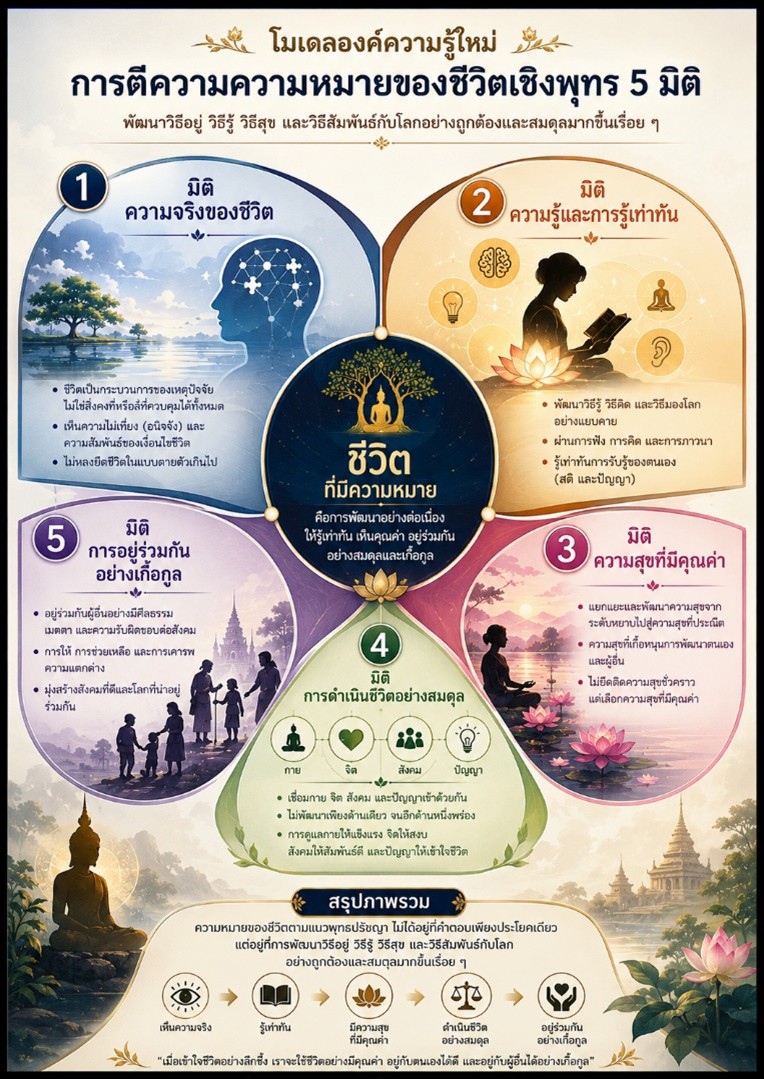
This academic article examines the role of Buddhist philosophy in interpreting the meaning of life in the modern world, analyzes key dimensions of meaningful living from a Buddhist perspective, and synthesizes academic implications for contemporary Thai society. The study employs qualitative documentary research based on Thai-language academic articles published in TCI/ThaiJO journals concerning life, happiness, quality of life, perception of the world, knowledge, ways of living, and human development in Buddhist philosophy. The findings show that Buddhist philosophy does not interpret the meaning of life merely as the pursuit of external success or temporary pleasure. Rather, it understands life as a process of seeing reality as it is, recognizing conditionality, understanding both happiness and suffering, cultivating wisdom, and living in balance with oneself and society. The reviewed literature consistently suggests that the meaning of life in Buddhist philosophy includes understanding the truth of life, developing quality of life in physical, mental, social, and intellectual dimensions, cultivating valuable happiness, using mindfulness and wise reflection to perceive the world, and coexisting ethically with others. This article proposes a new conceptual framework called the “Five Dimensions of Buddhist Interpretation of Life’s Meaning”: the reality of life, knowledge and awareness, valuable happiness, balanced living, and supportive coexistence. It argues that interpreting the meaning of life in a rapidly changing society should return to Buddhist philosophy not merely as ritual religion, but as a living framework of wisdom for understanding the world and cultivating a meaningful human life.
Article Details

This work is licensed under a Creative Commons Attribution-NonCommercial-NoDerivatives 4.0 International License.
References
จักรพงษ์ ทิพสูงเนิน รวิช ตาแก้ว และ กีรติ บุญเจือ. (2566). วิธีการสร้างความสุขตามหลักพุทธปรัชญา. วารสารรัฐศาสตร์ มหาวิทยาลัยราชภัฏสวนสุนันทา, 6(1), 74–84.
พระณัฐภัทร กิจฺจกาโร (เจริญรักษ์) และ พระมหาสุรศักดิ์ ปจฺจนฺตเสโน. (2562). ความสุขในพุทธปรัชญา. วารสาร มจร พุทธศาสตร์ปริทรรศน์, 3(2), 93–104.
พระครูศรีวชิรนิมิต (บุญเชิด ไพโรจน์) สมบูรณ์ บุญโท และสวัสดิ์ อโณทัย. (2568). การบูรณาการพุทธปรัชญาในพระมหาชนกชาดกเพื่อการพัฒนาคุณภาพชีวิตในสังคมไทยปัจจุบัน. วารสารเซนต์จอห์น (สาขามนุษยศาสตร์และสังคมศาสตร์), 28(42), 227–241.
วนิชญา ชัยยา และ พระมหาบุญไทย ปุญฺญมโน(2565). การพัฒนาคุณภาพชีวิตของคนไทยในศตวรรษที่ 21 ตามหลักพุทธปรัชญาเถรวาท. วารสารปรัชญาปริทรรศน์, 27(2), 181–194
สิรินทร์ กันยาวิริยะ และ ชิสา กันยาวิริยะ. (2567). ความสุขในองค์กรตามแนวพุทธปรัชญาเถรวาท. วารสารสถาบันพอดี, 1(4), 23–33.
