Aesthetics of Buddhist Art and Modern Thai Culture
Article Sidebar
Main Article Content
Abstract
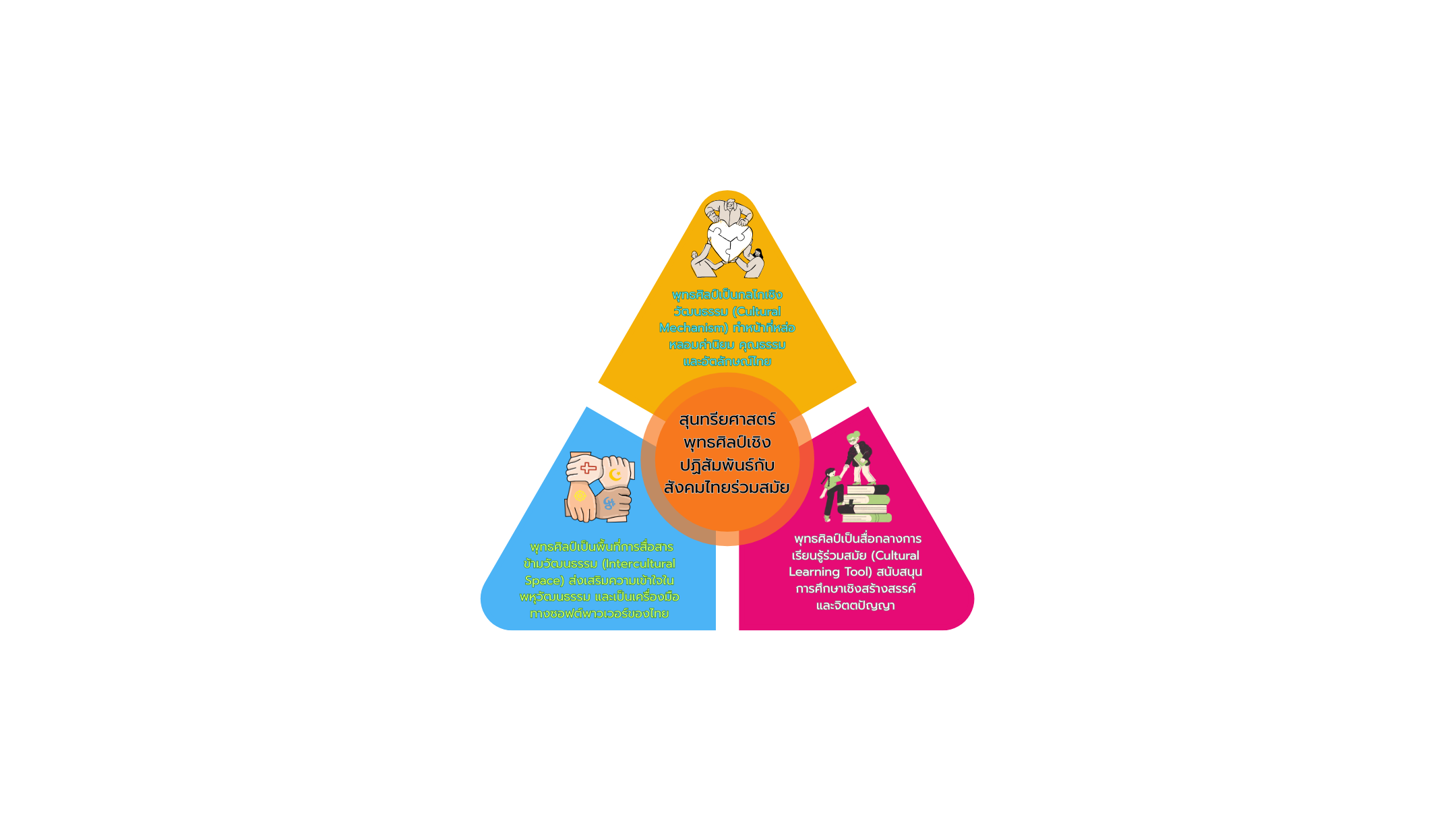
This academic article aims to present a new body of knowledge on the aesthetics of Buddhist art within the context of modern Thai culture. It emphasizes the synthesis of Buddhist philosophy and traditional Thai art with contemporary cultural trends in the era of globalization. At its core, the concept proposes that Buddhist art is not merely a tangible form of visual expression but a medium that conveys the "Aesthetic of Dhamma"—a harmonious integration of external beauty and inner awareness. This aesthetic embodies the ethical values of Buddhism and reflects spiritual serenity and compassion, forming a fundamental cultural framework for Thai society. The proposed model of knowledge consists of three key dimensions 1) Cultural Root – the dimension of the past, focusing on the continuity of traditional beliefs, Buddhist philosophy, and classical artistic heritage 2) Cultural Expression – the dimension of the present, highlighting the adaptation of Buddhist aesthetics through modern media, contemporary art, architecture, fashion, and digital platforms; and 3) Cultural Transformation – the dimension of the future, promoting Buddhist aesthetics as a cultural capital that can contribute to the sustainable and mindful development of Thai society. The outcomes of this conceptual model propose that Buddhist art functions as a Cultural Mechanism that shapes Thai identity and ethical consciousness; a Cultural Learning Tool that fosters contemplative and creative education; and an Intercultural Space that enhances mutual understanding in multicultural contexts. Ultimately, the Aesthetic of Dhamma serves as the central principle linking the past, present, and future, offering a meaningful and sustainable cultural trajectory for modern Thai society.
Article Details

This work is licensed under a Creative Commons Attribution-NonCommercial-NoDerivatives 4.0 International License.
References
กฤติภัทร สระทองชุน, และคณะ. (2568). พลังอำนาจการศึกษาเชิงพื้นที่ในการจัดการทรัพยากรพื้นถิ่นของสังคมวัฒนธรรมล้านนาผ่านระบบโรงเรียนไทย. วารสารครุศาสตร์ มหาวิทยาลัยนครพนม, 6(2), 1–11.
ชาติชาย จันทร์ประทีป, และคณะ. (2568). การออกแบบเครื่องแต่งกายแนวโอต์ กูตูร์ จากเอกลักษณ์จังหวัดพิจิตร. PSRU JITE, 7(2), 268–280.
จารุวิทย์ อุษมากรกุล. (2568). แนวคิดอทวิภาวะในปรัชญาเซนที่ปรากฏในสุนทรียศาสตร์ยูเก็น. วารสารปณิธาน, 21(1), 40–57.
ณัฐชัย นิ่มอนงค์, และ ต้นข้าว ปาณินท์. (2568). คอลลาจ: จากศิลปะนามธรรมสู่การสร้างสรรค์ทางสถาปัตยกรรม. วารสารสถาปัตยกรรม การออกแบบ และการก่อสร้าง, 7(2), 69–79.
ธมลวรรณ แสงนาค. (2568). ถักทอสุนทรียภาพแห่งชีวิต: ศิลปินหญิงร่วมสมัยในกรณีศึกษา. วารสารศิลปกรรมศาสตร์ วิชาการ วิจัย และงานสร้างสรรค์, 12(1), 1–16.
พงษ์พัฒน์ กุลเจริญพิพัฒน์, และ รตบงกช อิฐไธส. (2567). แสงสะท้อนของวัตถุแห่งความศรัทธาในพระพุทธศาสนา. วารสารพัฒนศิลป์วิชาการ, 8(2), 219–234.
พิพัฒน์ วิเชียรทัศน์, และ สุรินทร์ เมทะนี. (2568). แนวทางการพัฒนาเกณฑ์การประกวดวงดนตรีลูกทุ่งในศตวรรษที่ 21: ศิลปหัตถกรรมนักเรียน. วารสารนิเทศศาสตร์ มสธ., 15(1), 1–16.
ภิญญวุธ บุอ่อน. (2568). การสร้างสรรค์ประติมากรรมอาร์ตทอยชุดความเชื่อที่เลือนหาย. วารสารวิพิธพัฒนศิลป์ สถาบันบัณฑิตพัฒนศิลป์, 5(2), 100–120.
พระจิรภัทร อธิปญฺโญ (ชูเล็ก). (2568). พุทธศิลป์ยุคทวารวดี: การเผยแผ่ศิลปะและหลักธรรมในพระพุทธศาสนา. วารสารนวพุทธศาสตร์, 4(1), 55–65.
พระราชเมธีวชิรดิลก (ไพจิตร สาฆ้อง), และคณะ. (2567). พุทธศิลป์ในประวัติศาสตร์: การสร้างสรรค์และการแสดงออกทางศาสนา. วารสารมณีเชษฐาราม วัดจอมมณี, 7(6), 1420–1438.
พระศตวรรษ ชายทวีป. (2567). มรดกพุทธศิลป์ทวารวดี: การแสดงออกทางศิลปะและวัฒนธรรมในยุคโบราณ. วารสารนวพุทธศาสตร์, 3(2), 32–45.
มิ่งมนัส ชนจังหาร. (2568). ลักษณะหลังสมัยใหม่ในภาพยนตร์เรื่องขุนแผน ฟ้าฟื้น. Journal of Variety in Language and Literature, 9(1), 107–122.
วิณาภรณ์ แตงจุ้ย, ธนัญภัสร์ ศรีเนธิยวศิน, และ นฤมล ดำอ่อน. (2568). จิตสาธารณะของพลเมืองไทยในยุคแห่งการเปลี่ยนแปลง. วารสารปราชญ์ประชาคม, 3(4), 225–237.
สุรศักดิ์ พุทธา, และ วรเชษฐ์ โทอื้น. (2567). ศิลปาลัย: อนาคตภาพแห่งสายธารพุทธศิลป์. พุทธวารสารวิชาการรัตนบุศย์, 6(3), 656–668.
Yue, W., & ลักษณา คล้ายแก้ว. (2568). การเปิดรับสื่อและปัจจัยการสื่อสารที่มีผลต่อการตัดสินใจบริโภคอาหารประเภทหม้อไฟ ชาบูหมาล่า ของนักศึกษาจีนที่ศึกษาอยู่ในประเทศไทย. วารสารส่งเสริมและพัฒนาวิชาการสมัยใหม่, 3(4), 937–961.
